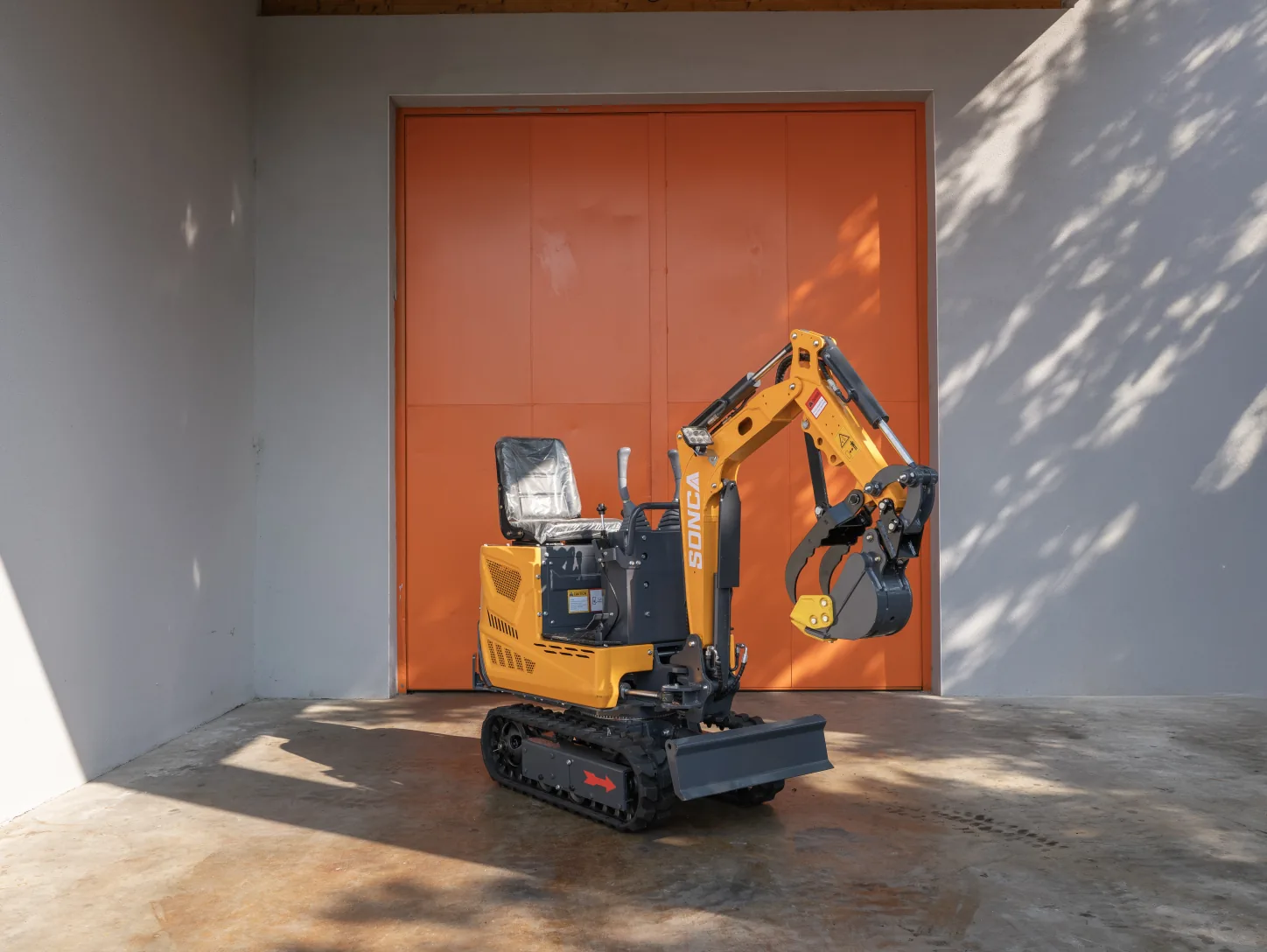
Working with a mini excavator in winter is entirely possible, provided you take a few precautions. Cold weather changes the way fluids behave, puts extra strain on the battery and weakens certain components. Thorough preparation prevents breakdowns, protects your engine and extends the machine's service life. This guide reviews all the points to watch out for, from starting up to lay-up.
Why cold weather is a problem
As soon as the temperature drops, three phenomena combine to complicate the use of a compact machine:
- Fluids thicken. Engine oil, hydraulic oil and coolant become more viscous. The pump and engine have to work harder to get them circulating.
- The battery loses capacity. A battery at 0°C delivers significantly less current than at 20°C, even though the starter demands more.
- Diesel can gel. Below a certain threshold, the paraffin in diesel crystallises and clogs the fuel filter.
Understanding these mechanisms allows you to anticipate problems. Most winter breakdowns are not caused by a fault with the machine, but by too abrupt a start or maintenance that is insufficiently adapted to the season.
Cold starting
This is the trickiest moment of the day. A cold diesel engine requires specific precautions, especially with the Laidong or Kubota engines fitted to our machines.
Respect the pre-heating
Diesel engines have glow plugs. When you turn the ignition on, wait for the pre-heating light to go out before operating the starter. In very cold weather, don't hesitate to repeat the pre-heating cycle twice. This step warms the combustion chamber and makes ignition easier.
Don't overwork the starter
If the engine won't start, limit attempts to about ten seconds maximum, then let the battery and starter rest for around thirty seconds. Persisting relentlessly drains the battery and risks flooding the engine.
Let it warm up to temperature
Once the engine is running, let it idle for a few minutes before calling on the hydraulics. This warm-up time allows the oil to circulate and reach a proper viscosity. Absolutely avoid revving straight into the higher ranges: a cold engine pushed too hard wears out prematurely.
Unsure about maintaining your machine?
Our France-based aftersales team supports you, with parts and advice, in winter as in summer.
Protecting the hydraulic circuit
The hydraulic circuit is the heart of a mini excavator: it drives the arm, boom, bucket and tracking. In cold weather, the thickened oil circulates poorly, which results in slow, jerky or sluggish movements at the start of the day.
- Warm the hydraulics up gently. After warming the engine, make slow, full movements of each ram (boom, arm, bucket) without load. This brings the oil up to temperature and softens the seals.
- Wait for normal fluidity. Only begin real work once the movements regain their usual responsiveness. Forcing a cold circuit puts abnormal strain on the pump and hoses.
- Check the level and condition of the oil. Hydraulic oil nearing the end of its life copes poorly with cold. Respect the recommended change intervals and check for the absence of leaks at the connections.
For regular use in very low temperatures, a hydraulic oil with a viscosity index suited to cold weather can be considered: seek advice before switching reference. Our mini excavator maintenance tips detail the seasonal inspection points.
Diesel and fuel in cold weather
Standard diesel begins to crystallise when temperatures turn negative. The paraffin crystals foul the fuel filter and can prevent the engine from running. Several precautions limit this risk:
- Use suitable diesel. In France, diesel sold in winter is treated to withstand the cold (the "extreme cold" version in mountainous regions). Fill up at high-turnover stations.
- Fill up in the evening. A full tank limits overnight condensation. The air present in a half-empty tank deposits water on the walls, water that can freeze in the circuit.
- Drain the water from the sediment bowl. Many machines have a water/fuel separator. Drain it regularly: accumulated water freezes first and blocks the fuel supply.
- Replace the fuel filter if necessary. An already fouled filter clogs much faster in cold weather. Replacing it at the start of the season is a wise precaution.
The battery in winter
The battery is one of the first components to weaken as the first frosts arrive. A machine that starts with difficulty in the morning is often signalling a battery on its last legs.
- Check the state of charge. Before winter, check the voltage and the tightness of the terminals. Clean the terminals of any oxidation (whitish deposit).
- Maintain the charge during prolonged standstill. If the machine remains idle for several weeks, a trickle charger prevents deep discharge, which irreversibly damages the battery in cold weather.
- Protect against frost. A discharged battery freezes much faster than a full one. Keep it charged, and if possible store the machine under cover.
- Anticipate replacement. A battery more than four or five years old is very likely to fail at the first cold snap. It's better to replace it as a precaution than to be stuck on site.
All our machines come with a 24-month warranty, and our France-based aftersales service quickly supplies wearing parts such as batteries and filters.
Tracks and frozen ground
Frozen ground and snow change grip and put extra strain on the undercarriage. A few good habits limit wear:
- Clear the mud before the frost. Mud caught between the rollers and the rubber tracks can freeze and block rotation. Clean the undercarriage at the end of the day.
- Take care with rubber tracks in very cold weather. Rubber becomes more rigid and brittle at low temperatures. Avoid abrupt manoeuvres and counter-rotations on hard, frozen ground.
- Adapt your driving. On slippery ground, reduce tracking speed and avoid side slopes. Grip is reduced even with tracks.
- Check track tension. A poorly tensioned track comes off more easily on uneven, frozen ground.
Winter storage and lay-up
If you're not using your machine for part of the winter, careful lay-up will see it in good condition come spring.
- Shelter the machine. Storing it under cover, or at least tarpaulined, protects against frost, snow and damp. The ideal is an enclosed, dry space.
- Clean before storage. Remove soil and plant debris that retain moisture and promote corrosion. Grease the pivot points.
- Check the antifreeze. The coolant must protect against frost down to the minimum temperature expected in your region. A quick check of the concentration prevents a cracked engine.
- Disconnect or maintain the battery. As seen above, a trickle charger, or a battery disconnected and stored somewhere warm, gets through the winter better.
- Run it regularly. During a long standstill, start the engine and operate the hydraulics once every week or two to maintain lubrication and prevent the rams from seizing.
These measures also apply to your other equipment: mini loaders, mini dumpers and hydraulic attachments deserve the same seasonal attention.
Checklist before each winter day
To sum up, here are the checks to carry out each cold-weather morning on site:
| Check point | Action |
|---|---|
| Pre-heating | Wait for the light to go out before starting |
| Engine warm-up | Let it idle for a few minutes |
| Hydraulics | Slow movements with no load until normal fluidity |
| Fuel | Full tank, sediment bowl drained |
| Battery | Clean terminals, prompt start |
| Tracks | Undercarriage clear, correct tension |
| Coolant | Level and antifreeze concentration checked |
With these precautions, a well-maintained mini excavator works without difficulty all winter. Reliability comes above all from regular maintenance and quality follow-up. Our new machines, available from €4,125 excl. VAT, as well as our used machines inspected on 50 points, benefit from aftersales support and a parts stock in France to spare you any prolonged downtime. If you have any doubt about unusual behaviour in cold weather, don't hesitate to get in touch before the problem gets worse.