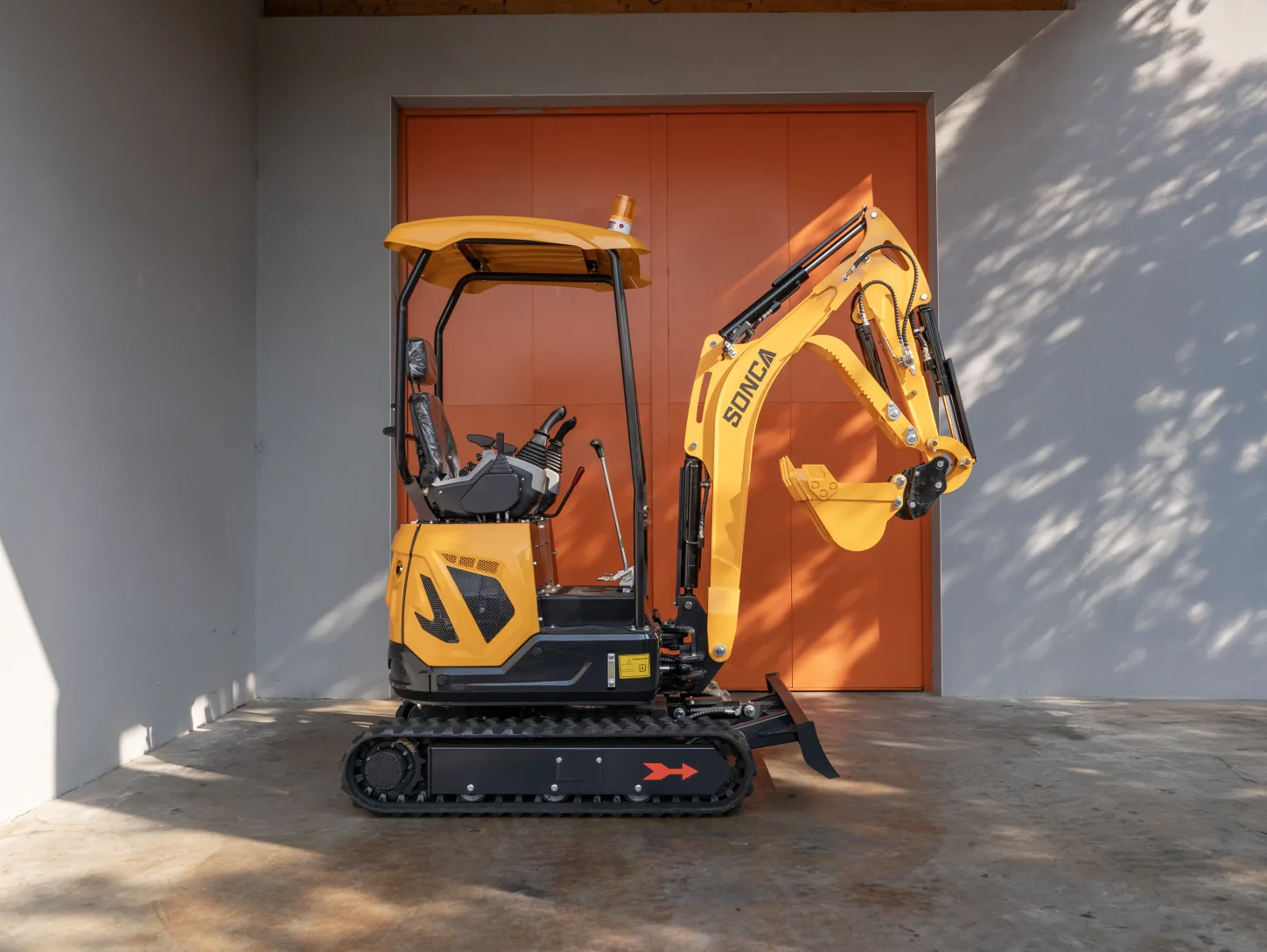
On a farm, earthmoving and maintenance work is constant: a ditch silting up, a fence to repair, a track washed out by rain, a pit to dig for a drinking trough or a tank. For a long time, these jobs relied on the spade and pickaxe, or on the occasional visit of a contractor. The agricultural mini excavator has changed all that: compact, economical and versatile, it lets you stay self-sufficient on most jobs.
This guide reviews the practical uses on the farm, the tonnage to favour depending on your work, the attachments that make a difference, and how to invest without breaking the bank thanks to direct import.
Why a mini excavator on the farm
The main benefit of a mini excavator in farming is self-sufficiency. Rather than waiting for a contractor to become available or hiring a machine on a job-by-job basis, you can act at the right moment, often out of season or between two crop tasks. A ditch gets cleared when it needs to be, not when the contractor happens to pass by.
The second advantage is controlled cost. On a farm, earthmoving needs come round every year. Over time, cumulative hire or subcontracting adds up significantly. A machine written off over several seasons quickly becomes profitable, especially as a new mini excavator starts from €4,125 excl. VAT with us. To compare the two approaches, our guide on buying or hiring a mini excavator details the break-even thresholds.
Finally, the mini excavator is versatile. With a few attachments, a single machine digs, clears, levels, drills post holes or handles loads. It's a Swiss army knife that finds its place alongside the tractor, without competing with it.
The main agricultural uses
Here are the most common jobs where a mini excavator proves its worth on the farm.
Ditch clearing and maintenance
Drainage ditches silt up with sediment, leaves and vegetation. Regular clearing keeps water flowing and protects fields from waterlogging. A mini excavator fitted with a grading bucket (wide and shallow) does this job cleanly, respecting the drainage gradient. It's a recurring use that, on its own, often justifies the purchase.
Installing and repairing fencing
Digging post holes with a crowbar is exhausting. With an auger mounted on a mini excavator, you can drill even, regular holes quickly, even in hard or stony ground. The machine also serves to level the fence line and backfill neatly. For long runs of pasture fencing, the time saved is considerable.
Drainage and buried networks
Laying a drain, a water pipe to a trough, an electrical supply to a building or an irrigation network means digging even trenches. The mini excavator excels at this kind of work, as our dedicated guide on trenches and networks explains. A narrow bucket produces clean cuts that limit the amount of backfill to replace.
Maintaining tracks and farmyards
Farm tracks suffer from the passage of machinery and from run-off. The mini excavator reprofiles the surface, re-cuts the drainage channels, fills potholes and spreads material with the blade or a grading bucket. It also makes it easier to maintain access to buildings and lay out yards.
Digging pits and small structures
A pit for a buried tank, a silo, a water reserve, the foundation of a shelter, the slab of a technical room: all these small structures benefit from the precise earthmoving of a mini excavator. On more technical jobs such as a pond, our article on earthmoving with a mini excavator gives the best practices.
Got a farm project in mind?
Our advisers will help you target the tonnage and attachments suited to your farm.
Which tonnage to choose
The choice of tonnage depends on the nature of your work, the space available and transport. Here are the main categories useful on the farm.
| Size | Typical agricultural uses | Points to watch |
|---|---|---|
| Micro excavator (~1 t) | Small ditches, pipe trenches, narrow access, yard | Limited reach and depth, very manoeuvrable |
| Mini excavator 1.5 to 2 t | Clearing, drainage, post holes, tracks | The best versatility/transport compromise |
| Mini excavator 2.5 to 3.5 t | Pits, heavy clearing, structures, backfilling | More power, transport to plan ahead |
For most farms, a 1.5 to 2 tonne mini excavator covers the bulk of needs while remaining easy to transport behind a pick-up or tractor. If your jobs are occasional and light, a micro excavator may suffice. If in doubt, our method for choosing a mini excavator guides you step by step according to your profile.
Also think about transport: a 1.5 tonne machine can be moved on a light trailer, whereas above that you need a more robust trailer. Our plant trailers come in 1.5 t and 2.7 t versions, and the guide on transport on a trailer sets out the GVW and lashing rules.
Useful attachments
The versatility of an agricultural mini excavator owes a lot to its attachments. Here are the ones that come up most often on a farm:
- Wide grading bucket: essential for ditches and fine levelling, it moves large volumes of loose material.
- Narrow buckets (30 to 40 cm): perfect for drainage and network trenches.
- Auger: for fence post holes and planting.
- Grapple or sorting grab: for handling stones, stumps, timber or backfill.
- Hydraulic breaker: useful in rocky ground or for demolishing small structures.
- Blade and quick hitches: the blade stabilises the machine and is used for reprofiling, while the quick hitch speeds up tool changes.
A well-designed quick hitch lets you switch from a bucket to an auger in a few minutes, which changes everything on a varied working day. Find our full range on the attachments page. Beyond the mini excavator, some farms complete their fleet with a mini dumper to remove spoil, or a mini loader for materials handling.
Buying smart with direct import
Investing in a mini excavator is a budget commitment, but the price difference between conventional channels and direct import is real. At CZN Machinery, an importer based in Toulouse since 2019, we cut out the middlemen: the new mini excavators from Sonca and Xcavator start from €4,125 excl. VAT, with standard Laidong engines (Kubota available to order). To understand this choice, see our comparison Laidong or Kubota.
Buying new isn't the only option. Our used machines are inspected across 50 points and come with a 6-month warranty, a good entry point for small farms. On new machines, the 2-year warranty, delivery throughout France, France-based aftersales and Sofinco financing secure the investment. More than 5,500 customers already trust us, as our company page recalls.
Before buying, it helps to know the market ranges: our guide to mini excavator prices gives you benchmarks to compare with peace of mind.
In summary
On the farm, the mini excavator is a versatile investment that makes the operation self-sufficient for clearing ditches, installing fencing, drainage, maintaining tracks and digging pits. A size of 1.5 to 2 tonnes covers the majority of needs, complemented by a few well-chosen attachments. With direct import, a 2-year warranty and aftersales in France, the purchase becomes accessible even for a small operation. To refine your choice, talk to our advisers via the contact page.